How to Choose the Right Garage Workbench for Any DIY Project or Hobby
Dennis Quintero • July 10, 2026

How to Choose the Right Garage Workbench for Any DIY Project or Hobby

Nothing kills momentum on a project faster than a work surface that shifts, sags, or wobbles mid-cut. Stability matters just as much for tightening a bike chain as it does for framing out a bookshelf, and it starts with a solid garage workbench. I always tell people that a folding table is a temporary fix, not a real solution. Start with a sturdy setup and you'll skip that headache later.


Garage workspaces vary wildly from one household to the next, and what works for framing lumber won't necessarily hold up under a car engine block. Some hobbyists need a surface tough enough for hammering and grinding, while others just need enough room to spread out craft supplies. Garages also swing through temperature and humidity changes across the seasons, which affects how certain materials hold up over time. Use case and environment together decide which features actually matter for your setup.


Several practical factors decide whether a garage workbench fits your space and your projects. Here's what I'll cover:


  • Garage space and layout
  • Workbench size and weight capacity
  • Height and ergonomic fit
  • Work surface materials
  • Storage and organization features
  • Mobility and portability options
  • Budget and value priorities


Keep reading to see exactly what to check before you commit to a bench.

Assess Your Garage Space and Layout

Before you buy anything, walk your garage and figure out how much floor space you can dedicate to a workbench without blocking foot traffic or your car door. Measure the wall or corner you're considering, then compare that number against the workbench dimensions listed by the manufacturer. Ceiling height matters too if you're mounting slatwall or shelving above the bench. Undersized spots create constant frustration every time you squeeze past the bench.


Corner placement tends to work well for anyone tight on square footage, since it frees up the center of the garage for parking or larger equipment. Against-the-wall setups give you easier access to outlets and pegboard storage, which comes in handy for smaller tools. Take your existing traffic flow into account, since a workbench that forces you to walk around your vehicle every time defeats the purpose.


Leave enough clearance in front of the bench to fully open drawers, pull out a stool, or step back and view your work from a distance. Doorways and garage door tracks need clear paths too, especially if you park inside during colder months. Wall-mounted tool storage nearby cuts down on how far you need to reach mid-project. This extra room prevents a cramped, awkward workspace later.

Measure Workbench Size and Weight Capacity

Standard garage workbenches typically run 4 to 6 feet wide and 24 to 30 inches deep, though compact models go smaller if space is tight. Depth affects how much room you have for tools, materials, or a project mid-build. Weight capacity matters just as much as footprint, especially if you plan to use a vise or mount a bench grinder. Look for a stated capacity of at least 300 to 500 pounds if your projects lean toward automotive or metalwork.


Load ratings usually reflect evenly distributed weight, not a single heavy object dropped in one spot, so check the fine print before assuming your bench can handle a specific tool. Steel-frame benches generally out-lift wood-frame options by a wide margin. Add up the weight of your heaviest tools and double it for a safety margin when you're unsure how much capacity you actually need.


Consider leaving a few extra inches beyond the bench itself for accessories like a vise, an outlet strip, or a mounted grinder. Expandable or modular workbenches let you add matching sections later if your tool collection grows. Measure the path from your garage door to the installation spot too, since larger benches sometimes need to come in at an angle. Double-check manufacturer specs against your own tape measure before finalizing a purchase.

Check Height and Ergonomic Fit

Comfortable working height keeps your back and shoulders from taking the brunt of a long project, and most benches land between 34 and 38 inches tall. Taller users do better near the top of that range, while shorter users may want a platform or an adjustable model. Repetitive tasks like sanding benefit from a slightly lower surface, since it reduces wrist and forearm strain. Precision work often calls for a higher surface that brings the project closer to eye level.


My rule of thumb is to stand naturally at the bench and check whether your forearms rest flat without hunching or reaching up. Adjustable-height models cost more, but they pay off if multiple people share the same garage space. Proper height matching reduces fatigue on long projects and keeps you working accurately for longer stretches.


Anti-fatigue mats placed in front of the bench reduce joint strain during long stretches of standing work. A tall stool lets you switch between sitting and standing for detail-oriented tasks like wiring or small assembly. Posture matters as much as bench height, so keep your shoulders relaxed and your wrists neutral while you work. Small adjustments like these add up over hours of use in the garage.

Evaluate Work Surface Materials

Work surface material affects durability, maintenance, and how well the bench holds up under specific tasks. These options each carry their own tradeoffs depending on what you're building.


  • Butcher Block: Solid wood offers a warm, classic surface that's easy to sand and refinish after years of dents and scratches. It absorbs shock well but needs occasional oiling to resist moisture damage in humid conditions.
  • Steel Tops: Metal surfaces resist dents, heat, and heavy impact better than almost any other material on the market today. They're a strong pick for welding or metalwork, though they can scratch and show wear over time.
  • Laminate Surfaces: Budget-friendly and low-maintenance, this surface resists stains and cleans up fast after messy projects. It won't hold up as well under heavy pounding or high heat compared to wood or steel.
  • Bamboo Composite: This renewable material combines impressive strength with a lighter environmental footprint than traditional hardwood options. It resists moisture reasonably well, though it costs more upfront than laminate or basic wood surfaces.

Match the material to how hard you plan to push your bench day to day. Pick the option that holds up under your specific workload instead of fighting against it.

Maximize Storage and Organization Features

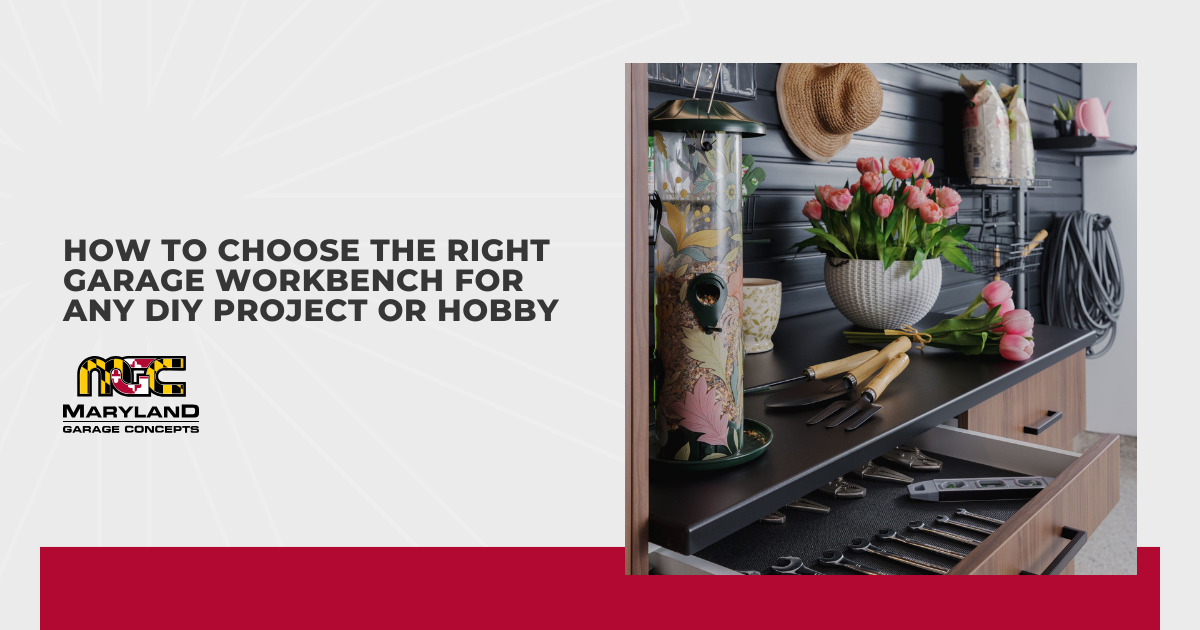
Built-in drawers keep small hardware like screws, bolts, and drill bits sorted and within reach instead of scattered across the surface. Open shelving underneath works well for bins, power tools, or larger equipment you use often. Pegboard backing or a slatwall above the bench adds vertical storage without eating into your floor space.


My usual recommendation is picking a bench with at least one lockable drawer if kids or guests have regular access to your garage. Modular storage systems let you rearrange bins and shelves as your projects and tool collection change over time. Cabinets with doors keep dust off sensitive tools compared to open shelving. Extra outlets or a power strip mounted to the bench frame save you from running extension cords across the floor.


Small parts organizers with individual bins keep nuts, bolts, and washers sorted by size instead of jumbled together in one drawer. A quick labeling system for bins and shelves saves you time hunting for a specific piece mid-project. Wall-mounted magnetic strips work well for frequently used metal tools like wrenches and screwdrivers.

Weigh Mobility and Portability Options

Locking caster wheels let you roll a heavy workbench out of the way when you need extra floor space for a bigger vehicle or project. Fixed benches, on the other hand, offer more stability for tasks that involve pounding, drilling, or heavy clamping. Wall-mounted or folding models make sense in smaller garages where every square foot counts.


Casters add convenience, but they can also introduce a bit of wobble under heavy use if the locking mechanism isn't solid. Test the wheel locks before you buy, especially if you plan to use power tools that generate vibration. Some benches offer a hybrid design with retractable wheels, giving you mobility when needed and stability when locked down. Consider how often you'll actually need to move the bench before paying extra for a mobile setup.


Rubber or polyurethane caster wheels protect concrete floors from scuffing and reduce noise when you roll the bench around. Wheel locks keep the bench firmly in place once you've positioned it, even under heavy vibration from power tools. Check the load rating on the casters themselves, since a heavy steel bench can exceed what cheaper wheels are built to handle.

Set Your Budget and Value Priorities

Basic workbenches start around $100 to $200 and typically include a simple frame with a laminate or particleboard top. Mid-range options between $300 and $600 usually add steel construction, better weight capacity, and built-in storage. Premium benches above $600 often include modular systems, heavy-duty casters, and commercial-grade surfaces built to handle decades of use.


My preference is spending a bit more upfront on a bench that meets my actual needs than replacing a cheap one within a year or two. Factor in how often you'll use the bench and how demanding your projects tend to get before deciding where to land on price. A higher price tag doesn't always mean better quality, so read reviews and check weight capacity specs instead of assuming cost equals performance. Base your decision on real workload, not the flashiest features, and you'll get the most value for your money.


Warranty coverage varies widely between brands, so check how many years of protection come with the frame, the surface, and any moving parts like drawers or casters. Extended warranties sometimes cost extra but can be worth it for heavily used benches in a busy garage. Replacement parts availability matters too, since a bench you can repair beats one you have to replace entirely after a few years.


Conclusion

Space, height, material, and budget all shape which setup makes sense, but the decision always comes back to how you'll actually use your garage. A hands-on test, if you can manage one, tells you more than any spec sheet ever will. Fit matters more than price when you're the one standing at that surface every weekend. Solid setups pay for themselves the first time you finish a project without fighting your own equipment.

Share this article

Recent Posts

Factors to Consider Before Installing Garage Shelving
By Dennis Quintero July 9, 2026
Learn what to check before installing garage shelving, from weight limits and wall type to material durability, access needs, and overall long-term shelf value.

8 Ways Closet Systems Make Your Daily Routine Less Stressful
By Dennis Quintero June 15, 2026
Explore how closet systems transform your daily routine, from faster mornings and easier outfit planning to smoother seasonal transitions and calmer spaces.

5 Expert Tips for Making a Shared Closet System Work for Any Couple
By Dennis Quintero June 11, 2026
Make your shared closet system work for you and your partner with five expert tips covering intentional space division, customized sections, and shared storage.
How a Custom Garage Storage System Can Transform Your Home
By Dennis Quintero April 7, 2026
Investing in garage organization not only improves functionality but also enhances your overall living environment. Read on to learn more!
Why Professional Garage Organization Beats DIY Every Time
By Dennis Quintero March 12, 2026
Looking to declutter your space? Garage organization experts create efficient, customized storage solutions that save time and enhance your home’s value.
Garage Organization: Common Mistakes Homeowners Make
By Dennis Quintero January 30, 2026
Maryland Garage Concepts shares garage organization tips: skip common mistakes, improve safety, and reclaim space for a clean garage.

Creative Garage Shelving Ideas for Small Spaces
By Dennis Quintero December 17, 2025
A cluttered garage can quickly feel overwhelming, especially when square footage is limited. At Maryland Garage Concepts, small garages are one of the most common challenges homeowners face, which is why smart garage shelving solutions are essential.
Garage Organization Ideas for Smarter, Clutter-Free Spaces
By Dennis Quintero November 24, 2025
Discover garage organization ideas that create smarter, clutter-free spaces. Learn how Maryland Garage Concepts transforms garages into efficient, usable areas.
Boost Your Home’s Value with These Garage Upgrades
By Dennis Quintero October 31, 2025
Your garage is a key part of your home that can significantly increase its value when upgraded thoughtfully.